
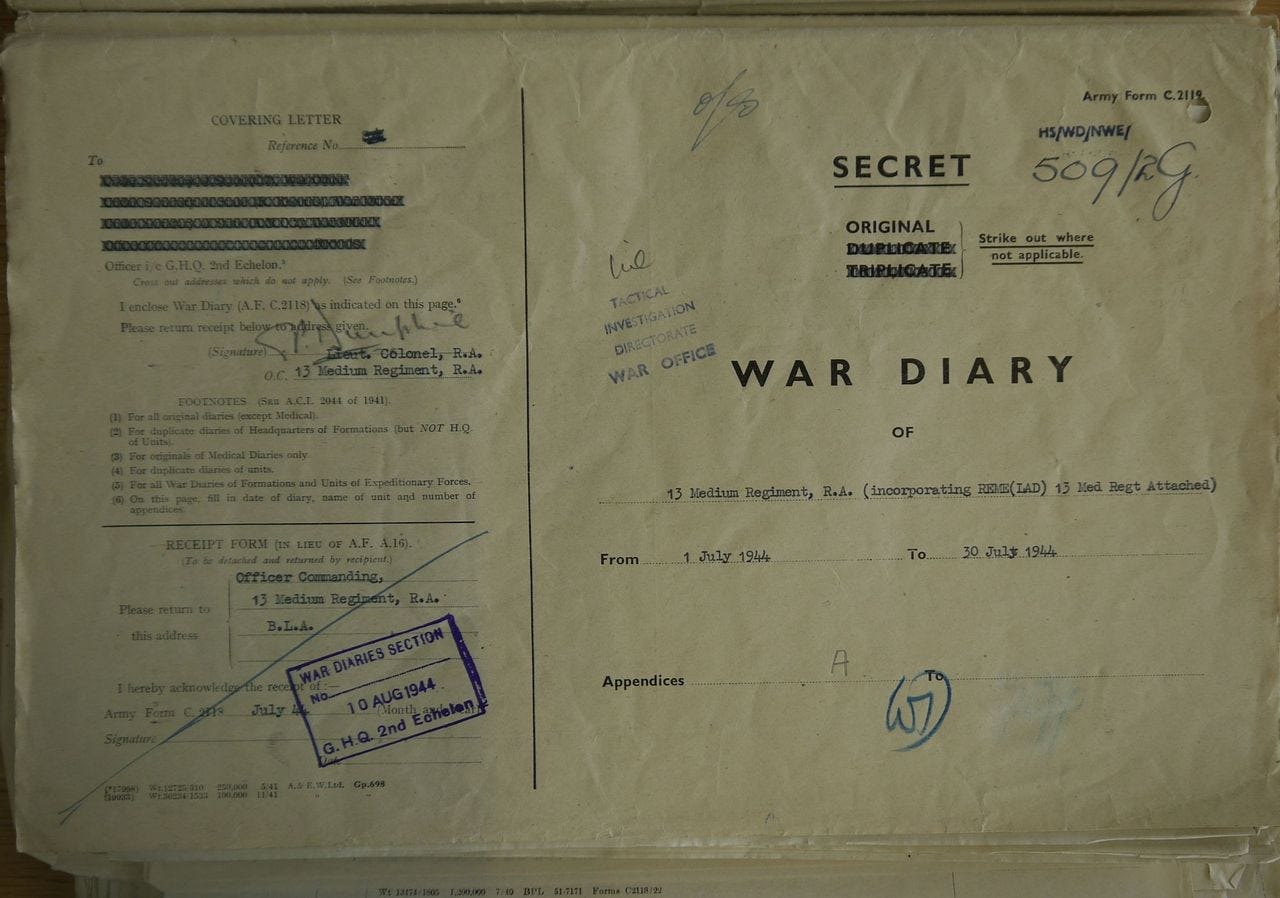
Official war diary cover for 13 Medium Regiment, Royal Artillery, covering 1–30 July 1944.
July 1944 – Into the Crucible of Normandy (Cover Page)
With the English Channel behind them and their heavy 5.5-inch guns fully de-waterproofed, Gunner Joseph Wilding and the 13th Medium Regiment, R.A. stepped right into the most intense, grueling month of the Normandy campaign: July 1944.
Before diving into the operational daily logs, here is the official cover sheet that bound all of July’s reports together.
🔍 What the Document Shows
Unit Name: 13 Medium Regiment, R.A. (incorporating REME (LAD) 13 Med Regt Attached).
Dates Covered: 1 July 1944 to 31 July 1944 (note the typist accidentally typed 30 July and inked in 31!).
Signed By: Commanding Officer Lt. Col. G.P.W. Dunphie, R.A.
Address Stamp: Now marked as B.L.A. (British Liberation Army).
Receipt Stamp: Received by War Diaries Section, G.H.Q. 2nd Echelon on 10 AUG 1944.
💡 Key Details in Plain English
“B.L.A.” (British Liberation Army):
Notice the stamp on the left-hand receipt form: Officer Commanding, 13 Medium Regiment, R.A. – B.L.A. On June’s cover page, they were still based in the UK. By July 1st, they were officially part of the British Liberation Army fighting on continental Europe.
The Engineers (REME / LAD):
The title line explicitly highlights incorporating REME (LAD). The Light Aid Detachment from the Royal Electrical and Mechanical Engineers was the mechanical backbone of the regiment. In July, as guns were fired non-stop and vehicles took shrapnel damage, these mechanics worked around the clock alongside toolmakers like Grandad to keep the guns firing.
Peak Operational Period:
July 1944 was defined by massive, bloody operations around Caen (Operation EPSOM, Operation CHARNWOOD, and Operation GOODWOOD). This cover sheet contains the records of the month where the regiment would fire thousands of high-explosive rounds in support of the front lines.
🪖 What Lay Ahead
As July opened, Joseph and 89 Battery were no longer practicing in southern England or sitting on cargo ships off Southend. They were dug into French soil, setting up command posts, camouflaging their 6-tonne guns, and preparing for non-stop fire missions.
Drop in the first operational page of July whenever you’re ready, and we’ll see their very first days in combat!